
The second year of college had begun. On the very first day, I came to know that Ravindra had left our college and taken admission somewhere else. Since I had secured the first rank with a first class, he had to step down from his friends’ shoulders on the result day. He had found it deeply humiliating.
By then, I had made quite a few friends in college. But rather than calling them friends, it would be more appropriate to call them associates, because many of them later confronted me.
Anna would often tell me,
“Never make too many friends. A person who has many friends truly has none, while the one who has a single friend has a real one. Your friends will be the very people responsible for shaping you, or ruining you.”
What Anna used to say was absolutely true. Over the past few years, I had experienced this very deeply myself. That is why I became very choosy when it came to friends.
Now everyone in the classroom had started looking at me differently. But I remained the same as always, Paragon slippers, old pants, and just one new shirt.
The association’s meetings had started. Plans were being made regarding which programs should be organized throughout the year and what new activities could be introduced.
The Hindi Association meeting had not yet taken place because, after Ravindra left, there was no one willing to take the initiative.
One day, after class, the Hindi professor asked me,
“Will you handle the work of my association?”
With some hesitation, I replied,
“It will take quite a lot of time, Ma’am. I may not be able to give enough time to my studies.”
She smiled and said, “Oh, it’s not like you must work for the association all day long. Once every week or two, you just sit with me for planning, put notices on the notice board, call our meetings
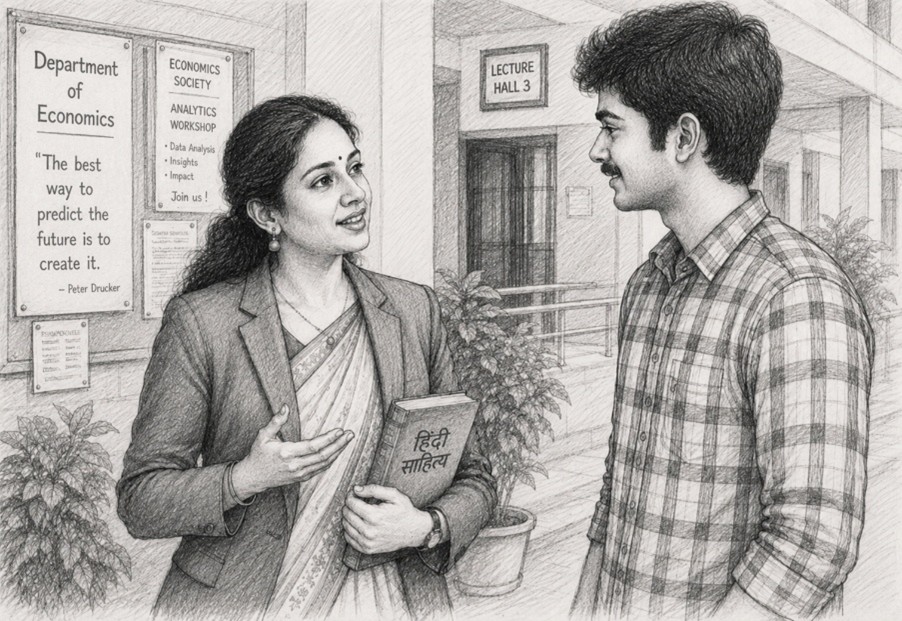
after competitions and write the names of the selected students on the notice board… that’s all !”
I hesitated and said,
“But…”
She immediately replied,
“Oh, come on! Won’t you even be able to do this much? Don’t worry, I’ll guide you. Is that okay now?”
Before I could say anything further, she smiled and added,
“And anyway, this responsibility suits a responsible boy like you.”
Hearing the word “responsible” felt as if someone had placed a heavy burden on my head.
I did not know how “responsible” I truly was, but by calling me “responsible,” a responsibility was being placed upon me.
To be honest, I was never interested in such things. My world revolved around studies, the gym, cricket, and a life limited to myself. But ever since I had topped the class, people’s perceptions had changed. In some eyes there was admiration, in some there was distance… and in some, competition.
Now it was impossible to refuse her. After thinking for a moment, I said,
“Alright, Ma’am. I’ll try.”
And with slight reluctance, I agreed.
We started holding Hindi Association meetings. Plans were made one after another for poetry writing, story writing, essay competitions, debates, and various other activities.
Ma’am would ask for my opinion every time. In the beginning, I would only say, “Okay” or “As you wish,” but gradually my hesitation started fading away. A strange new feeling had begun to grow within me. Until yesterday, no one had paid much attention to me, and today I was standing there as the representative of the association.
During those days, I realized something for the very first time that a person does not grow merely through books; responsibilities also shape him.
I organized the first competition for the Hindi Association. It was an essay-writing competition. To promote it, I put up notices on all the noticeboards in both college buildings. The competition received an overwhelming response, and many students participated in it. I also took part in the competition and won the third prize.
When I had taken admission to college during the first year, the incidents that had occurred in my past had made me quite introverted. Except for cricket and weightlifting, I never participated in any competitions. I always stayed in the background.
The Hindi professor had recognized this. She constantly encouraged me to participate in different competitions. She wanted my shyness and negative outlook to disappear. In fact, she had deliberately entrusted me with the responsibility of the Hindi Association so that the leadership qualities within me could develop.
Not only me, but she encouraged every student to participate in competitions. In truth, it is the duty of every teacher to recognize the talents within students and guide them toward the overall development of their personality.
She once told me,
“You should participate in every competition. From this year onward, I want to see a different Dhananjay.”
Her words settled deep somewhere within my heart.
Along with studies, I immersed myself completely in cricket practice, gym workouts, weightlifting, powerlifting, and organizing association programs. Gradually, I began to realize that life is not merely about thinking of oneself; it is equally important to stand in society and fulfill one’s responsibilities.
All of this began taking up much of my time. College started at seven in the morning and ended around ten or ten-thirty. Since cricket practice took place after college hours, it would be afternoon by the time I returned home.
After coming home, I would study for three to four hours, and in the evening, I would go to the gym again. After exercising there for two hours, I would return home around eight at night. Even after that, I would continue studying until midnight.
As I mentioned earlier, many students in college had chosen the Arts stream merely to obtain a degree. Therefore, books and notes would appear in their hands only when examinations approached.
But from the very first day, I had fixed five hours daily for studying. I had begun studying for my B.A. with the same seriousness with which an engineering or management student studies.
Getting admission into college itself felt like a priceless gift given to me by God. It was with that feeling that I pursued my studies.
College had resumed regularly. Whenever Kamble Sir came across me, he would never pass by without looking at me angrily. Now he had to take all his lectures regularly every day. On top of that, I had left his subject in the first year, chosen Hindi instead, and secured the first rank with a first class in college. That had clearly struck a nerve with him.

But more than that disappointment, what hurt and angered him most was the fact that he now had to take all the lectures from morning onward, and I was the reason behind it.
Once, the Marathi Association had organized a Marathi story-writing competition. I had become so deeply involved in studies and other activities that I had not even noticed the notice about the competition. In truth, the event had not publicized very well either.
After reaching college, the Marathi professors asked me,
“You are participating in the story-writing competition, aren’t you?”
“No, Ma’am. When is the competition?”
She looked surprised and said,
“Oh, the competition is today itself, and it has already started! And why are you not participating?”
I replied,
“I didn’t even realize that the competition was today.”
She immediately said,
“That’s alright. Go inside and take part in the competition.”
With slight hesitation, I said,
“But I haven’t prepared anything.”
“That doesn’t matter. Write a story on whatever comes to your mind.”
I entered the classroom. Since it was a Marathi story competition, more students had participated compared to the Hindi story and essay competitions. Around forty to fifty students were taking part. The entire class was immersed in story writing.
A considerable amount of time had already passed since the competition had started. I took a paper from the judges and sat down on a bench. I could not think of what to write. Apart from school essays, I had never written anything like this before.
Just two days earlier, the Hindi essay competition had taken place, and I had secured the third rank in it. That alone had given me a little confidence.
After thinking for a long time, I finally began to write.
By the time the story reached the middle, the allotted time was over. Most students had already finished writing. I requested another fifteen to twenty minutes. After completing the story, I submitted it to the judges and walked out.
The result of the competition was to be announced within a week.
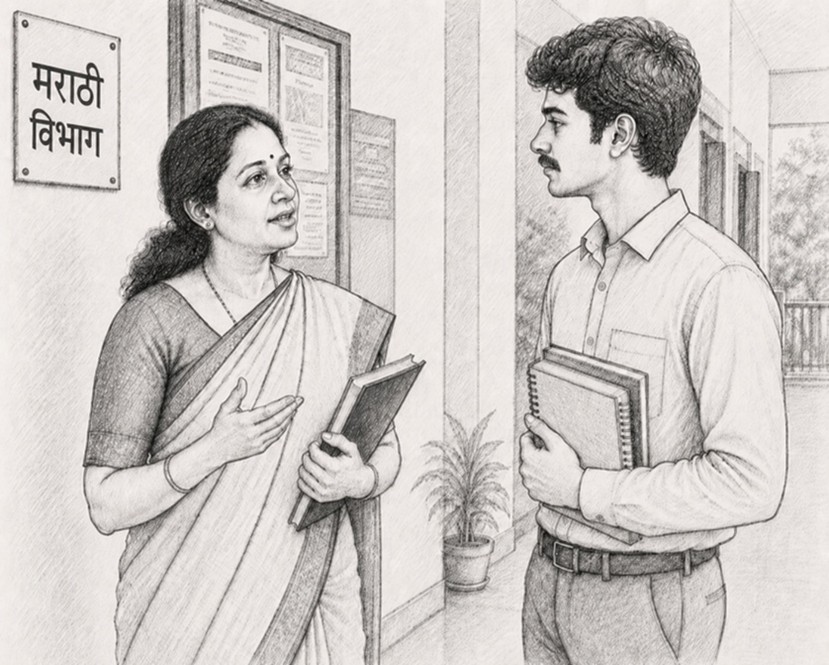
A day or two later, the Marathi professor called me and said, “It doesn’t feel like you have written this story.” Surprised, I asked, “Ma’am, why do you feel that I may not have written it?”
She replied,
“Because until now, I have never come across such a story in college competitions.”
I could not understand anything. I simply stood there silently.
She continued,
“The way you have described the incidents in the story is very imaginative. Do you do reading?”
“Yes, Ma’am.”
“Alright then, you may go.”
The next day, the results of the competition were announced. As soon as I reached college, everyone started congratulating me. I had secured the first rank in the competition. On the Marathi Association notice board, my name was shining at the top position.

Anna was extremely fond of reading. At home, he had practically built a treasure of books. It included Shakespeare’s Romeo and Juliet, Sir Arthur Conan Doyle’s Sherlock Holmes stories, Edgar Rice Burroughs’ Tarzan stories, Baburao Arnalkar’s mystery novels,
Narayan Dharap’s horror stories, Jayant Narlikar’s science fiction, as well as hunting stories by Jim Corbett and Kenneth Anderson.
There was a huge collection of books on a wide variety of subjects.
I, too, had developed a deep love for reading from childhood. Whenever school vacations began, Anna had made it a rule that we children should read every one of those books.
During the summer vacation in May, we siblings, along with a few of our book-loving friends, would sit beneath a Gul mohar tree with books in our hands and spend hours enjoying the pleasure of reading.
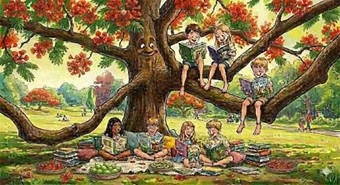
One or two of us would even climb the tree and sit on its branches, reading there with great delight. Each of us carried tamarind, raw mangoes, and little packets of salt mixed with chili powder. As we ate those sour tamarinds and raw mangoes dipped in spicy salt, we would lose ourselves in books.
Since Shakespeare’s writing was in Early Modern English, most of it used to go over our heads. So except for that, we devoured almost every other book in the collection.
During the holidays, Anna would give us various tasks such as covering the books, repairing torn pages, and arranging them neatly in a large wooden trunk according to the author’s names. Because of this, we developed a unique emotional attachment to books.
Even after reading the same book ten times, our minds would never feel satisfied. Such was the brilliance of those authors.
Every writer has a unique style of writing. Through their thoughts and imagination, they create scenes and characters within stories and novels. Some people read merely to pass time, but they do not truly immerse themselves in the situations or dialogues created by the author.
In my opinion, the true joy of reading lies in emotionally immersing oneself in the scenes created by the writer and personally experiencing them while reading.
The story I wrote for the Marathi story competition was a short horror story. I had written it within barely an hour. Naturally, the language of the story carried the influence of the horror stories and literature I had read, but the events and descriptions in it came entirely from my own imagination.
Reading the works of different authors had helped me present the subject of my story in a somewhat unique way. It was the result of the reading habit Anna had cultivated in us that my Marathi story won the first prize in the competition.
A few days later, I organized a story-writing competition on behalf of the Hindi Association as well. That competition too received an enthusiastic response from the students. Of course, I also participated in it, and in that competition too, I secured the first rank.
Winning first prize in both the Marathi and Hindi story competitions gave me a distinct identity in college.
This success in the story competitions was not merely about winning prizes for me; it was the reward of the rich imagination that reading had given me.
While reading the works of various authors, their styles, scene construction, strength of dialogues, and ability to create atmosphere had slowly become engraved in my mind. As a result, while writing stories, words began to flow naturally on their own.
The habit of reading that Anna had instilled in us became the greatest treasure of my life. Books did not merely give me knowledge; they gave me a new perspective on thinking.
Every book opened the door to a new world. Sometimes mystery novels gave a sense of suspense, horror stories revealed the power of atmosphere-building, and science fiction gave limitless wings to imagination.
From those days onward, I strongly began to realize one thing, reading does not merely make a person knowledgeable; it expands the entire world of one’s thoughts.
The experiences gained through books feel as alive as living real life itself. And perhaps that is why the prizes I received in those story competitions were not merely trophies for me; they were acknowledgements of the culture and values of reading that Anna had given us.
Among my other subjects, Geography was one of them. R. D. Patil Sir used to teach it. He was handsome, always cheerful, and extremely warm-hearted by nature. He treated students like friends.
Very popular among students, he used to conduct a unique activity in college. Every year, he would take the Geography Department students on a picnic to some scenic place near Khopoli. All the students going on the trip would contribute money to cover the expenses.
The picnic was usually organized near a riverbank or a dam. Early in the morning, all of us students would gather at the S.T. bus stand around six or seven o’clock. Then we would catch the first bus going toward the picnic spot and reach there by around nine or ten.
After reaching the spot, the students themselves, especially the girls, would cook the food. Some students would gather firewood, some would bring groceries and cooking materials from the nearby market, while others would prepare leaf plates from tree leaves and wash them clean before use.
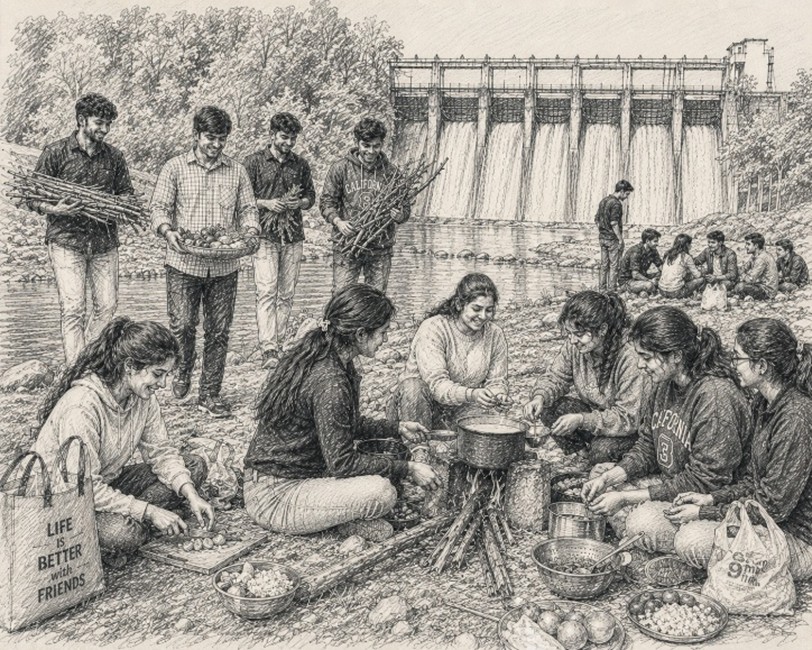
Sir himself would bring the cooking utensils. Once the food was ready, everyone would sit together in rows beneath a tree, chatting and thoroughly enjoying the freshly cooked meal with its smoky aroma.
After lunch and a little rest, Sir would organize a few team-bonding activities for us. The entire day would pass in a cheerful and lively atmosphere filled with laughter and fun. In the evening, only after ensuring that all the students had boarded the S.T. bus back to Khopoli, would Sir finally leave for his home.
The students of the Geography Department eagerly waited every year for the day of this picnic.
Once, during a Geography lecture, Patil Sir was teaching a topic related to the Earth’s atmosphere. Suddenly, he said to the students,
“Let me ask you a general question. Let’s see how much general knowledge you all have.”
“Alright, Sir, ask us!” a few students replied enthusiastically.
Sir asked,
“What is the reason behind the hole that has formed in the Earth’s Ozone gas layer?”
Everyone became confused by the question because there was no mention of the Ozone gas layer anywhere in the Geography syllabus.
One student asked,
“Sir, what exactly is this Ozone gas?”
Sir explained,
“The Ozone gas layer exists in the uppermost part of the Earth’s atmosphere. Because of the hole formed in this layer, the harmful ultraviolet rays of the sun reach the Earth. This Ozone layer protects the Earth by preventing those rays from reaching us. So now that a hole has formed in this layer, what could be the reason behind it?”
Sir’s information was partly correct, but it was not entirely up to date. The rest of the class was completely unaware of the topic. No one really knew anything about the Ozone layer and soon whispers began spreading across the classroom.
One student, flaunting his knowledge, replied,
“Sir, maybe an airplane flew too high and passed through that layer, creating the hole.”
The entire class burst into laughter. Even Sir started laughing.
Another student, attempting to give a more scientific answer, said,
“Sir, America and other countries constantly launch satellites into space. Huge rockets are used to carry them there. Perhaps the intense hot smoke released from those rockets created the hole in the Ozone layer.”
Everyone felt there might be some truth in his answer. Now the entire class waited eagerly to hear what Sir would say.
Sir asked him,
“Where did you read that?”
The student replied,
“I haven’t read it anywhere, Sir. I just feel that way.”
Sir said,
“To answer a question accurately, you need proof. Your answer is completely wrong.”
Once again, the students looked at one another. Sir had now turned the question into a challenge for the entire class.
No one stood up to answer for a long time, so while I was standing up to answer, Sir said,
“Alright, I’ll tell you. The hole in the Ozone layer has been caused by chemical gases emitted from chemical factories.”
Someone immediately asked,
“Which gases, Sir?”
Sir replied,
“Especially Carbon monoxide gas has caused the depletion of the Earth’s Ozone layer.”
At that moment, I raised my hand.
Sir looked at me and said,
“Yes, Dhananjay, speak.”
I stood up and said,
“Sir, the hole in the Earth’s Ozone layer has not been caused by Carbon monoxide, but by a gas called Chlorofluorocarbon.” That was it…! in front of the entire class, I had directly challenged Sir’s answer.
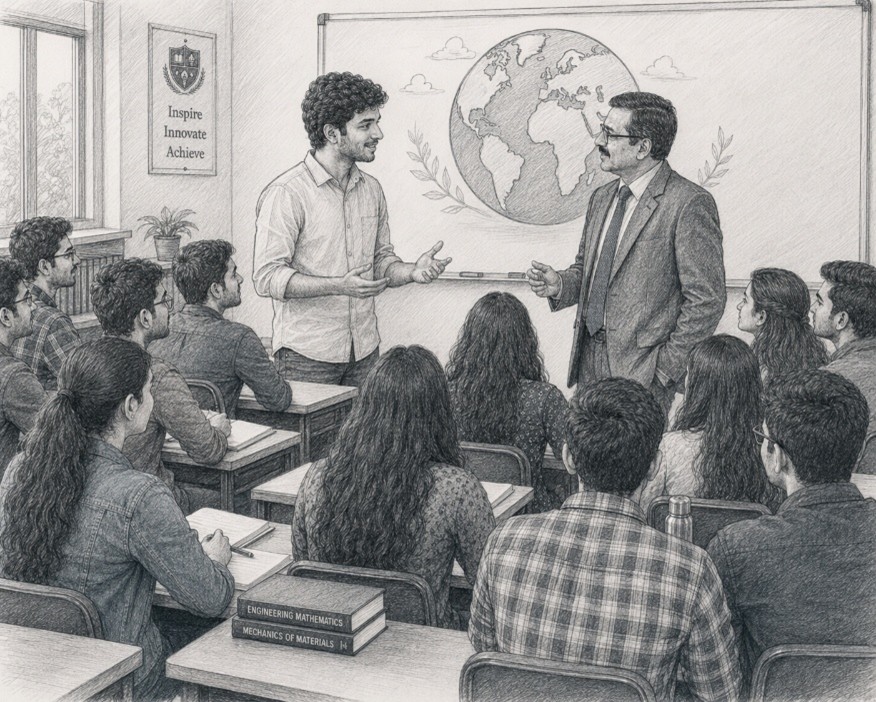
For a moment, there was a complete silence spread across the classroom. Then everyone began whispering while looking alternately at me and Sir.
The students in the class already knew nothing about ‘Ozone gas’, and by mentioning a new term like “Chlorofluorocarbon,” I had completely bewildered the entire class.
This topic was now going over their heads. Everyone was looking at us both like spectators.
Patil Sir smiled and said to me,
“Come on, Dhananjay, who told you this? And what kind of new gas have you discovered now? Where did you read this?”
At that time, while preparing for competitive examinations, I used to read a well-known English magazine called Frontline, which focused on current affairs. Coincidentally, that month’s issue carried a detailed article on the Ozone hole, and I had read it.
By chance, Sir had asked a question on the very same topic.
I replied,
“Sir, there is an article about this in Frontline magazine. It contains information about this gas. This gas is released into the atmosphere because of refrigeration processes.
Whispers once again spread across the classroom. Chlorofluorocarbon, Frontline magazine, refrigeration, everything sounded completely new to them. Everyone once again began looking alternately at me and Sir.
By saying that this gas was released into the atmosphere through refrigeration processes, I had directly contradicted Sir’s statement that the Ozone depletion was caused by gases emitted from chemical factories. For a moment, even Sir seemed confused.
Realizing that the entire class was watching him, Sir asked me,
“What kind of magazine is this?”
I answered,
“Sir, it is a newly launched magazine based on current affairs.”
Just then, the bell rang, signaling the end of the lecture. While leaving, Sir said,
“Alright. Bring that magazine tomorrow. Let’s see what exactly is written in it.”
The rest of the students looked at me as if thinking, what strange new things does this fellow keep discovering!
The next day, I took the magazine to college. As soon as Sir entered the classroom, he asked,
“So, did you bring that magazine?”
Overall, it seemed that Sir was also very eager to know about what I had said yesterday.
“Yes, Sir, here it is,” I replied, walking up to his table and showing him the article.
Sir took the magazine into his hands and carefully examined its pages. It was published by The Hindu newspaper group.
He read the article and then shook my hand, saying,
“Excellent! You have kept yourself extremely well updated with current affairs.”
After that, he asked me why I read such magazines. I told him that I was preparing for competitive examinations and that this magazine was very useful for staying updated with current affairs.
Then, turning toward the class, he said,
“Now this is how one should study! Merely running behind the syllabus is not real studying; that is rote learning. One must also do additional reading related to the subject so that we can understand what new developments are happening in that field and what new discoveries are being made, just like we learned today. Very good, Dhananjay! Keep it up!”
That year, I organized the highest number of competitions for the Hindi Association and also personally participated in all of them. I also took part in competitions organized by other associations.
In those competitions, I secured first rank in the Hindi Association’s debate and story-writing competitions, while I won third rank in impromptu speech and essay-writing competitions.
I also won first rank in the Marathi Association’s story competition and secured second and third prizes respectively in the quiz competitions organized by the English and Geography Associations.
Through all these experiences, I strongly realized one thing, the true key to success lies in the combination of reading, hard work, self-confidence, and proper guidance.
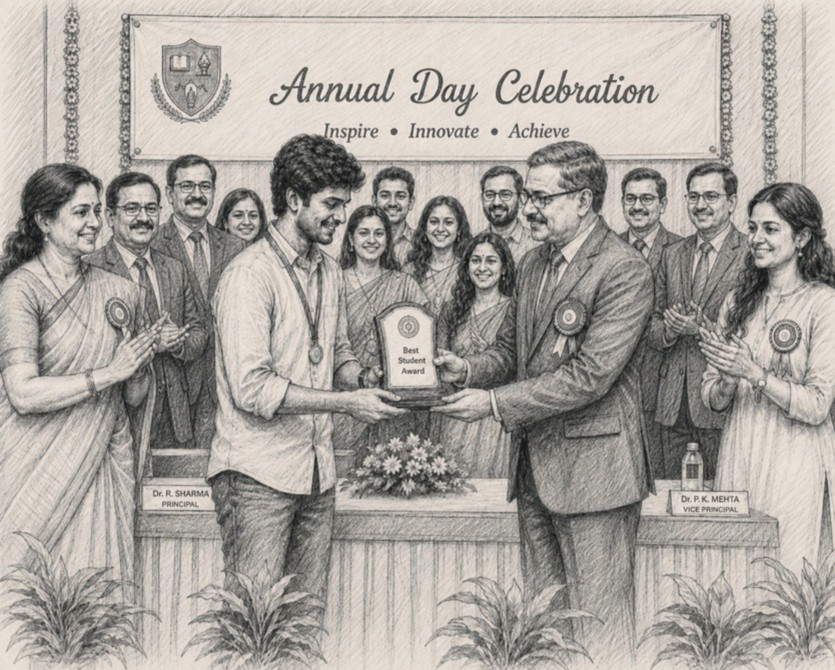
During the college annual gathering, prizes practically poured over me. I had won the highest number of awards. While presenting the prizes to me, the Principal patted my back and said,
“Well done, Dhananjay! You have shown an excellent performance in every field. Keep it up!”
On behalf of the Hindi Association, I received the “Best Organizer” award. Apart from association competitions, I had also participated in various sports events.
In the Mumbai University weightlifting competition and the college annual sports powerlifting competition, I secured second and third prizes respectively.
That year too, I was selected from the college cricket team for the university-level tournament. I participated in almost every competition and won prizes in nearly all of them, including two university-level competitions conducted by Mumbai University.
That year, I won a total of twelve prizes in different competitions. By participating in various college sports events, Mumbai University competitions, and association activities, I became the first student in the college to win the highest number of prizes across such a wide range of events.
When I took all those certificates and trophies home, Aai and Anna were overjoyed. My father had been appointed as the Principal at the Maharashtra Government’s Forest Department institution in Khopoli, the Indo-Japanese Agriculture Institute.
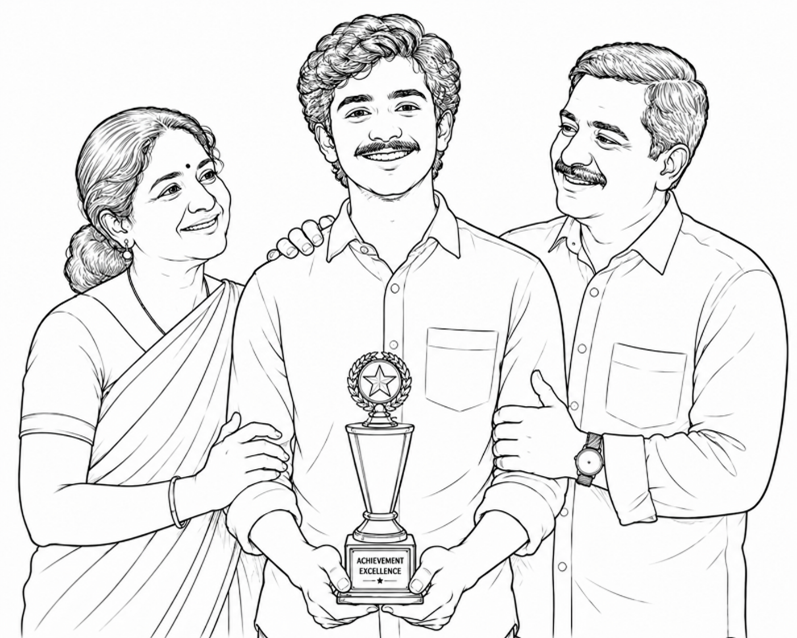
The very next day, he carried all my certificates and trophies to the institute to show them to his students. He felt immensely proud of me. I had not broken the trust he had placed in me; rather, I had strengthened it even more.
The annual examinations for the second year of college were approaching. Staying awake late into the night, I once again began studying with full determination. Despite balancing sports, association competitions, and various activities, I had managed to keep my studies consistently on track. Now I started revising every subject thoroughly.
The examinations began. Because of my all-round performance throughout the year, the attention of professors from every subject had turned toward me. All my exams went well.
A few days later, the results were announced, and that year too, I secured “First Class First” in the Arts faculty annual examination for the second consecutive year.
Within a single year, a complete transformation had taken place within me. The introverted boy who always stayed in the background had changed entirely. Whether in studies, gym, sports, or competitions, I had tried to push myself forward in every field, and I had succeeded also.
The students and professors in college had begun noticing me. A completely new confidence had developed within me. The entire credit for this went to the Hindi professor.
She had once told me,
“From this year onward, I want to see a different Dhananjay.”
And that was exactly what had happened. She constantly encouraged me to participate in speech competitions, story writing, essay writing, debates, and many other activities.
This Hindi professor was extraordinarily talented. She used to write short stories, poems, shayari, and stories in Urdu. None of her work had been published yet. Occasionally she would give me her poems or stories to read and ask for my opinion.
I would read her work and share my thoughts from time to time. She wrote beautifully. I would often tell her,
“Ma’am, why don’t you get your literature published?”
She would smile and say,
“Oh, who has the time for all that?”
To this, I would reply,
“Ma’am, One day I will definitely get your work published. One day, you are going to become a great literary figure.”
Of course, I never got the opportunity to publish her work.
After completing college, I moved to Pune, and over the years we lost contact. But she had played an invaluable role in transforming my personality from within.
A few years later, when I went to Dadar for a ‘pre-employment medical test’, I happened to meet a classmate from college in the crowd on the sidewalk.
Through her, I got the professor’s phone number.
While speaking with her, she told me that she had earned a Ph.D. from Mumbai University. Some of her poems, stories, and shayari had also been published. She had begun creating a distinct identity for herself in the world of Indian Urdu literature. Hearing this made me immensely happy.
Recently, the Government of India recognized her significant contribution to Indian literature and honored her with the prestigious Sahitya Akademi Award in Urdu literature.
Once, during a casual conversation, I had told her,
“One day, you are going to become a great literary figure.”
And truly, through her hard work, she had turned those words into reality.
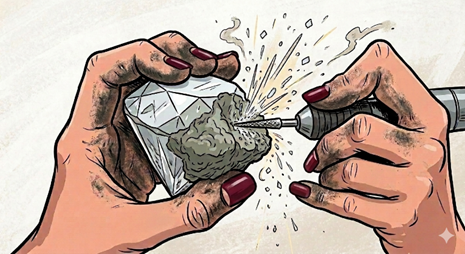
As for me, she had become, in the truest sense, a magician, an alchemist.
To be continued…
Incredible Story!!
Very nice written..!!
It’s truly inspiring — ‘The journey to experiencing your inner power to turn the ordinary into extraordinary’ beautifully captures the magic of self-belief, growth, and transformation. It reminds us that extraordinary outcomes are often created by ordinary people who dare to discover the strength within themselves. Powerful, uplifting, and deeply motivating.
Very captivating inspiring story
Kudos to the Hindi teacher.
… truly an alchemist !!
What makes your story so inspiring is that it’s real. It’s not about a perfect life—it’s about overcoming challenges, learning from hardships, and never giving up. That’s what makes it powerful.