
This post's average rating is: 5
That family stayed with us
for a few days and returned to their village once the floodwaters receded. The
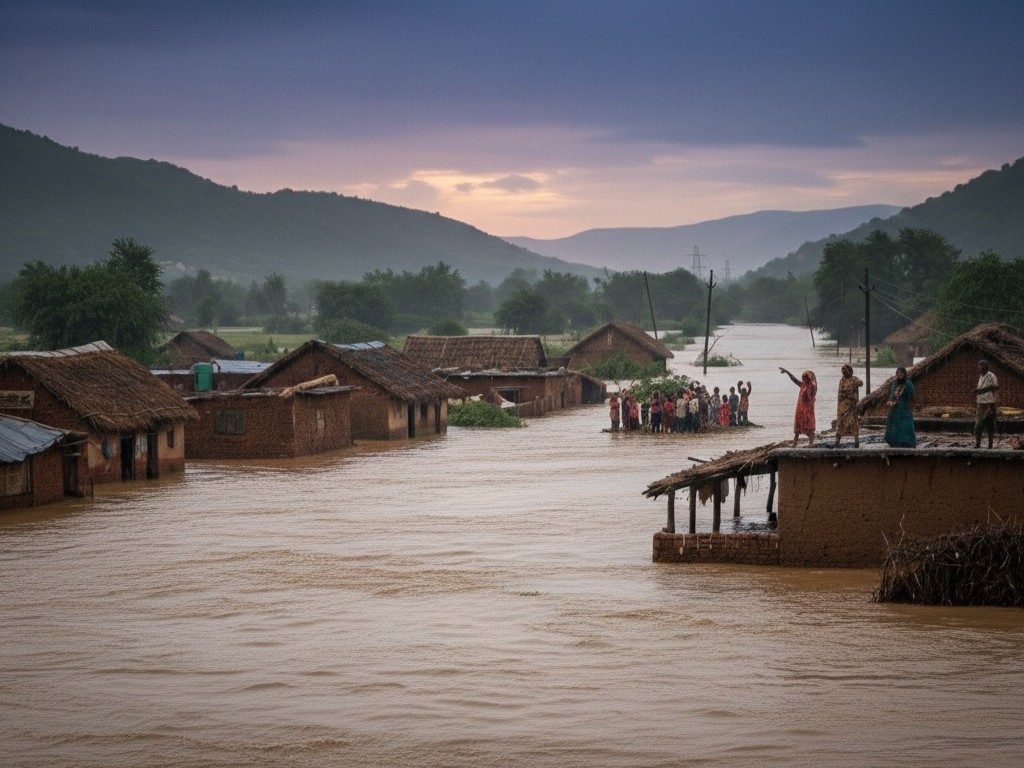
flood had devastated the entire area.
The whole marketplace and
half the village had been underwater for two to three days. Many familiar
people had drowned. Some couldn’t escape when water suddenly rushed into their
homes. They tried to take shelter in their attics, but the flood was so massive
that it submerged half the houses in the village. When the waters covered
entire homes and people couldn’t escape through the attic, many were trapped
and died there. Their bodies were later found on those same lofts.
That night, the entire
Konkan coast experienced an unprecedented, record-breaking downpour resulting
flooding in areas like Pali and Nagothane was severely
worsened by a high tide that occurred on the evening of July 23. This
created a backwater effect, preventing floodwaters from rivers like Savitri,
Gandhari, and Amba from discharging into the sea. The Amba River was
one of them. It flows from Khopoli, Pali, Jambhulpada, Vakan, Nagothane, then
onward through Poynad and Wadkhal, eventually meeting the Dharamtar Creek. The
meeting of multiple rivers (Savitri, Gandhari, Kal, and Nageshwari) near Mahad
created a bottleneck, as the sheer volume of water from the Sahyadri mountains
reached the low-lying plains almost simultaneously.
When the water surged into
the rivers with tremendous force. This wall of water rushed down to Pali,
Jambhulpada, and Vakan. Pali, being a little farther from the river, suffered
less damage. But Jambhulpada was completely caught in the flood’s grip. In the
middle of the night, the torrent crashed into the village. The entire village
was submerged and destroyed. Very few people survived by sheer luck.
Jambhulpada village was obliterated.
Next to our house lived a
retired school teacher from Jambhulpada. He and his wife had rented the house
beside ours while repairs were being done on their village home. Their
grandchildren had come to stay with them for the holidays, and they had brought
them to Nagothane because Jambhulpada was mostly an Adivasi settlement, and the
children would get bored there. The kids had no parents, only their
grandparents looked after them. Sadly, that very day the elderly couple had
gone to Jambhulpada, and they were never seen again.
On the Mumbai–Goa highway
near Wakan bridge, long lines of vehicles were stuck on both sides. At Vakan,
the river had risen so much that water flowed over the bridge during the night.
The enormous wall of floodwater hit the bridge. Water rushed over it from both
sides with tremendous force. Vehicles parked on either side were swept away in
one blow. Several ST buses traveling to and from the Konkan were among them.
Many lives were lost. After the floods receded, numerous vehicles were found
tangled in the riverbed, and the bodies inside were unrecognizable.
Next to our house lived a
retired schoolteacher from Jambhulpada. He and his wife had rented the house
beside ours while repairs were being done on their village home. Their
grandchildren had come to stay with them for the holidays, and they had brought
them to Nagothane because Jambhulpada was mostly an Adivasi settlement, and the
children would get bored there. The kids had no parents, only their
grandparents looked after them. Sadly, that very day the elderly couple had
gone to Jambhulpada, and they were never seen again.
On the Mumbai–Goa highway
near Wakan bridge, long lines of vehicles were stuck on both sides. At Vakan,
the river had risen so much that water flowed over the bridge during the night.
The enormous wall of floodwater hit the bridge. Water rushed over it from both
sides with tremendous force. Vehicles parked on either side were swept away in
one blow. Several ST buses traveling to and from the Konkan were among them.
Many lives were lost. After the floods receded, numerous vehicles were found
stuck in the riverbed, and the bodies inside were unrecognizable.
The entire village and
surrounding region were devastated. Most people abandoned the village because
it was uninhabitable. There was mud everywhere, a terrible stench, and the
threat of disease. Restoring electricity to the village took a full month.
Two days later, my uncle
came from Mumbai with a car. He brought groceries, biscuits, cucumbers, and
whatever food items he could manage. Many parts of the highway were still
flooded, and he struggled to reach Nagothane. His help was invaluable to all of
us.
We, too, decided to leave
the village as there was no electricity.
My father arranged a tempo through his contacts in Pen. We loaded all
our belongings into it and left the village. We moved to Khopoli, where my father
was allotted a spacious government bungalow.
It took two years for
Nagothane to be rehabilitated and rebuilt. The village was resettled.
We never met that family
again. They never reached out. Life moved on.
Everyone’s life in that
village took a new turn. What I had done that night though I didn’t know how to
swim, I had still risked my life and stepped into the floodwaters, choosing
instinct over consequence—changed me forever. Rescuing that baby and his mother
was something none of us could have anticipated. That split-second decision
taken without worrying about the consequences, saved a family from disaster.
Going through all of that changed me too. I had witnessed nature’s fury from
terrifyingly close. I realized how insignificant human life is before the
forces of nature. In a way, the experience brought a kind of introspection into
my personality. I became quite introverted after that.
That flood cost me a year of
college. I enrolled again in a new college at Khopoli. leaving the past behind
and beginning again.
But some nights after
that…The river was flowing through my dreams.
The way you narrate real events with such intensity makes the story feel vivid and real.